
Research Archives / PSEI research
The Casey Pomeroy House
The full PSEI research report on the Casey Pomeroy House, including its architectural history, residents, and collected source material.
- Research date
- Not recorded in the surviving document
- Website edition
- 2026-10-29
The Casey Pomeroy House
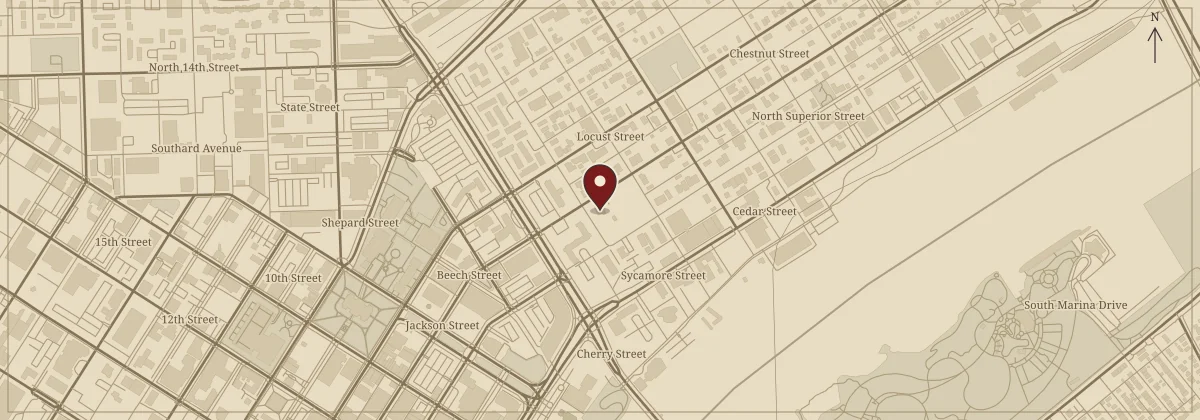
802 North Huron Street
Toledo, 43604
Property Information:
Parcel I.D. Number: 154035
Square Feet: 10,590
Year Built: 1870
Location: Vistula Historic District
Current Owner: 802 N HURON VENTURES LLC
Details and History (from the brochure):
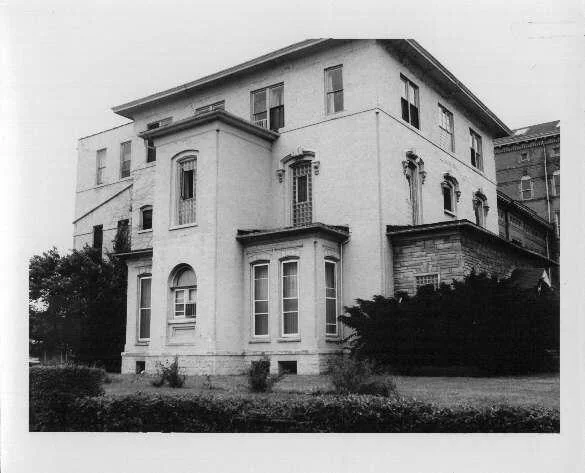
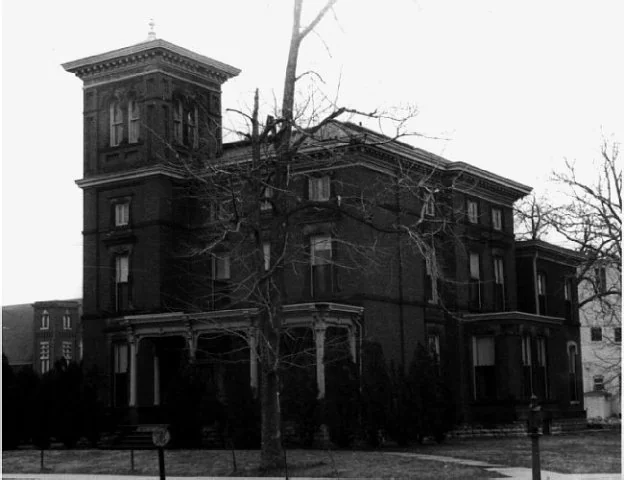
The Casey Pomeroy is a three story Italianate building was built in the Vistula Historic District, located just north of downtown Toledo, Ohio. The building has classic Italianate features-including a 4th story tower rising over 50 feet above the ground. Only 15% of Italianates were built with a tower, making this home even more rare.
The home was built by Theodore B. Casey, who relocated to Toledo from Middlebury, Indiana, where he had married the sister of Miles D. Carrington. In Toledo, Carrington and Casey became partners in a Grain and Commission House, which quickly became a success.
At the time, no other firm did more to further the trading of grain on the Great lakes. As movers of grain, Carrington and Casey quickly became shipping magnates. They commissioned the building of the David Dows, which was built on the Toledo’s Maumee River. The David Dows, the largest cargo schooner to ever sail the Great Lakes, and at that time the largest five-masted schooner in the world, was named after a close friend and prominent Chicago businessman.
The David Dows was a fast yet controversial ship that sailed two years in its prominent role as a cargo schooner although it sailed on the Great Lakes for another six years. On Thanksgiving Day of 1883, in a frigid, icy store on Lake Michigan, it sank in 40 feet of water just 7 miles off the Chicago coastline. It remains there today a frequent stop for scuba divers.
Following the deaths of three of their four children in quick succession, the Caseys relocated out of the state. Upon death, however, the Caseys were returned to Toledo to be buried next to their children in Forest Cemetery. Interestingly, they are buried next to the Carringtons. The Caseys and Carringtons share opposite sides of the same headstone.
The second owner of the mansion was a prominent banker, John Worthington. When his only child, Matilda, married George E. Pomeroy, Jr., Worthington gave the couple the home at 802 N. Huron.
Pomeroy was from the Pomeroy family of Clinton, Michigan. His father, George Pomeroy, Sr., was noted for his letter express line, the Pomeroy Express, and Devised the first postage stamp. After some legal troubles with the U.S. Government over the letter express line, which was competing with the U.S. Mail Service, the Pomeroy family ventured into real estate and relocated to Toledo.
Following his marriage to Matilda Worthington, socialite George, Jr. connected with Edward Drummond Libbey, the son of a glass manufacturer in New England. Having met his future wife at a party thrown by the Pomeroys at 802 N. Huron, Libbey relocated his glass manufacturing business to Toledo, thus establishing Toledo as the Glass Capital of the World. The Libbeys also funded the building of the Toledo Museum of Art.
Around 1924, as the childless Pomeroys aged, they gifted the home to the Catholic Diocese to be a part of the future St. John’s College Campus. The campus utilized both the Carrington and Casey mansions which were built on adjacent parcels. All other homes on this block were destroyed to make space for the campus. A chapel and two small wings for classrooms were added to the home, and it became a convent for the Sisters of St. Francis.
During the 79 years the Catholic Diocese had the property, the Casey-Pomeroy home housed various teaching programs, including a school for troubled boys chartered by the Toledo Public Schools. The home stood vacant for eight years and unheated for four years prior to its purchase by Susan Burkett. Sue has been renovating the structure to return the home to a private residence and Bed & Breakfast. The stolen stain glass windows have been recovered, repaired and duplicated for reinstallation in the Chapel.
Sue and her partner Stuart Cline, already live in and are active in the Vistula Historic District. In an effort to save the declining structure and help find an appropriate buyer, they toured the property with City of Toledo officials. By the time the tour had ended, Sue already decided that she personally must help save this treasure, which she felt had good structure and flow but really needed a friend- and fast. The 14,000 square foot labor of love began in mid 2003 and has encompassed both exterior and interior restorations.
The entire structure has been re-wired to eliminate its dangerous cloth wrapped electrical wiring. Old, brittle cast iron plumbing has been replaced. Original plaster ceilings complete with wide crown moldings and plaster medallions have been repaired or duplicated. Parquet floors and original window shutters will be refinished as original. A modern kitchen and two first-floor ADA restrooms have been added within the space. Period color schemes, historic reproduction wallpapers, and Eastlake antiques will complete the interior of the project.
The exterior of the structure includes classic Italianate features-clean lines with decorative soffit wood-working and a tower with high arched double windows (all windows are 9 feet tall). The decorative wood-working of the soffit, which houses the critical internal gutter system, has rotted, fallen off or been damaged by bird waste over the years. The lack of proper water shedding has led to some brick damage and to leaks inside the home. About 90% of the original soffit needed to be replaced using 11 different custom-cut wood profiles. Wood cutters that are specific to the house needed to be created to accomplish the task. In addition, special lift equipment was required to safely reach the three-story soffit.
The Casey-Pomeroy House stands on a busy corner in the Vistula Historic District as a shining example of historic rescue. Its geographic proximity to downtown Toledo and the Maumee River will help offer visibility in a growing urban revitalization. The fact that this home is one of the only two homes left standing on the block is a key point, and the other home, unfortunately, is in imminent danger. The neighborhood and surrounding community, in general, has been excited about the renovations that have taken place and see an “eye sore” returning to the elegant structure it once was.
The Casey-Pomeroy House is now coming full circle as it began as an elegant residence for several founding or prominent families of Toledo, became a religious and educational institution, and has returned to a residence an Bed & Breakfast.
Home built by Theodore B. Casey, a grain commissioner who was in business with his brother, Miles D. Carrington.
The next owner was wealthy banker John Worthington and his wife , who gifted the home to daughter Hanna Matilda and George Pomeroy Jr. when they married.
The newlywed socialites partied regularly, It was George who was responsible for meeting Edward Drummond Libbey at the train station in hopes of luring him to Toledo to relocate his glass manufacturing facility (Libbey Glass).
In 1924, the Casey-Pomeroy House was acquired by the Catholic Diocese of Toledo, which made the entire block into the St. John’s Jesuit College campus. The diocese added a couple of wings on the house, used as a convent, converting one room into the house’s chapell.
It was first home to Ursuline nuns; later to Sisters of St. Francis. The nuns shared 10, small bedrooms. On the third floor, where six bedrooms are located, the outlines of long-since-removed crosses are still visible on the walls, along with an impression of a larger cross in the hallway.
The house remained in the hands of the diocese for 79 years before the current owner, Sue Burkett, purchased it.
Notes Gathered from Patrick the Innkeeper (Interview by Nichole)
- There was a major fire across the street at a college, did not elaborate.
- Innkeeper Patrick hears ladies voices in the “Hannah Matilda” room, Owner Sue hears mens voices there.
- Patrick has heard his name called as has Sue.
- Things are moved to unusual places.
Quick Phone Call with Bob:
- Bob did see old school desks, and the home had been a school in the past. We were standing in the remodeled kitchen at the time which used to be one of the school rooms. Patrick confirmed that there were still some desks left over in the basement.
- Bob believes a boy was hurt there and that there may have been an attempted cover-up.
- Bob sensed a fire in the boiler room at one time.
- He also believed someone had died or was killed in the attic or upstairs. He mentioned someone may have fallen downstairs, there are alot of stairs in the home, including some steep ones leading up to the belltower.
- Bob thought a car had possibly driven through the building at one time, not confirmed.
- There may have been a dumbwaiter in the home but no longer seems to have one.
- Bob sensed possible gang shooting which is very possible with the area the home is located in.
- Bob sensed that there were trinkets in the walls and Patrick confirmed they had found trinkets in the walls.
Miles D. Carrington
Born in Litchfield, Connecticut,
- January 1, 1823.
Died at Marseilles, France,
- March 22, 1887
He was married November 20, 1849 to Elizabeth M. Casey.
- Elizabeth’s date of birth is unknown, she died August 17, 1886
Together they had 6 children:
- Alice, Mrs. Charles Royce, New York
- Kate, Mrs. Frederick Shoemaker, Toledo, Ohio
- William T. of Toledo
- Annie, Mrs. John S. Hannah, Chicago
- Zoe of Toledo
- Bessie, Toledo.
The Carrington House sat directly behind the Casey-Pomeroy House. It was demolished in 2008.
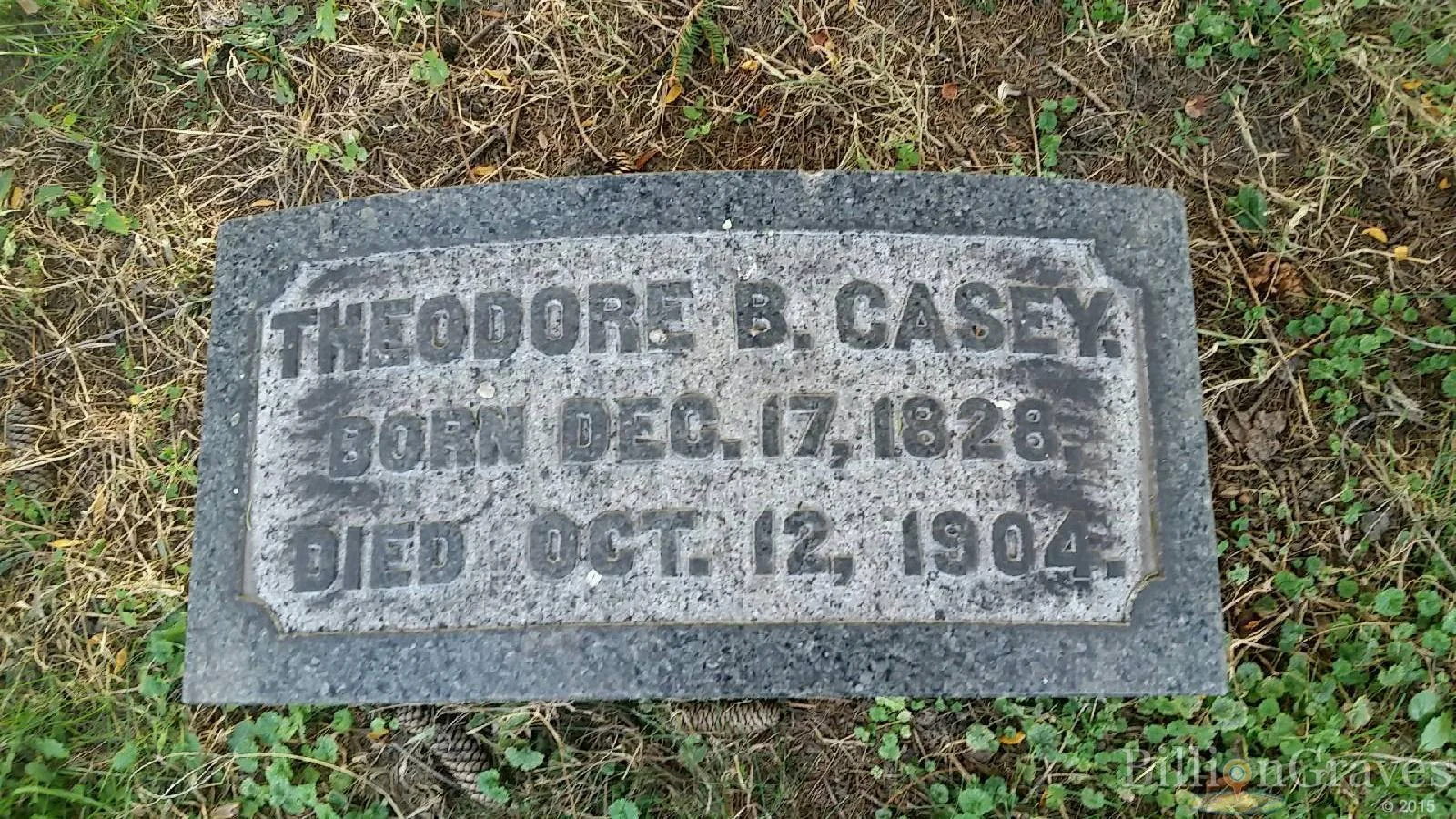
Theodore Buell Casey:
- Born December 17, 1828
- Died October 12, 1904
Buried:
- Forrest Cemetery
1704 Mulberry St, Toledo, OH 43608
There is not much to be found about the life of Mr. Casey. It looks to be that not only did his friend and business partner marry his sister Elizabeth Casey, but that Mr. T. B. Casey married Mr. M. D. Carrington’s sister Elizabeth as well! Casey and Carrington were more than business partners. Their families were close as well. They had their Italianate Homes built near one another, and buried at Forest Cemetery together. Unfortunately there was no record that could be found pertaining to the deaths of three of the Casey children.
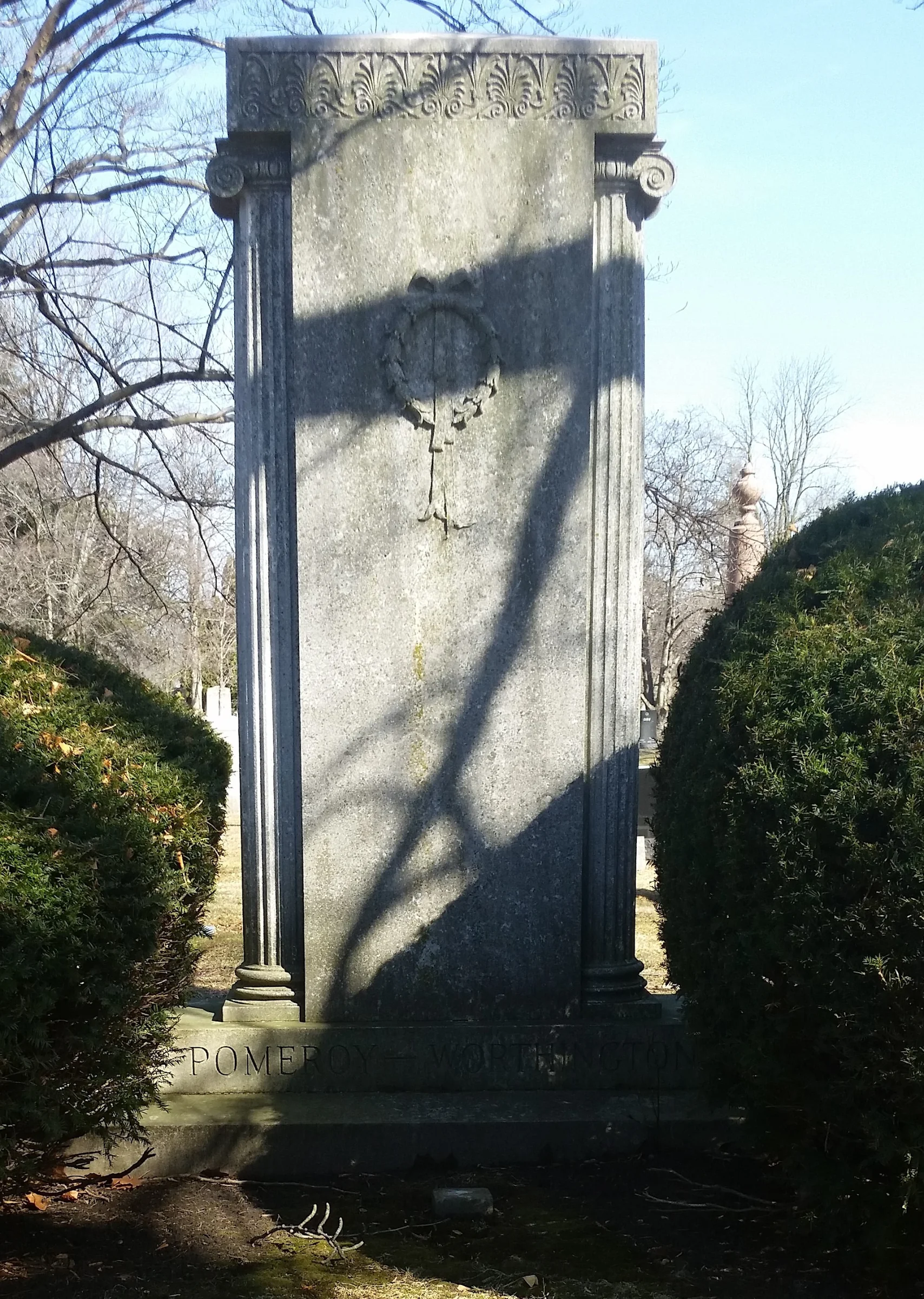
John Worthington:
Birth: Unknown Date
- Maryland, USA
Death: March 18, 1884
- Toledo, Ohio
Buried:
- Woodlawn Cemetery
Toledo, Ohio
George E. Pomeroy:
Birth: Date Unknown
- Clinton, Michigan
Death: January 26, 1928
Toledo, Ohio
- He is listed as being 78 years old at the time of death.
- He suffered a heart attack Nov 1927, they did not live there at that time
Buried:
- Woodlawn Cemetery
Toledo, Ohio
Matilda W. Pomeroy:
- Birth: Date and location unknown
Death: October 6, 1933
Toledo, Ohio
- She is listed as being 83 years old at the time of death.
Buried:
- Woodlawn Cemetery
Toledo, Ohio
George and Matilda Pomeroy did not have any children, Their mane residence was 802 North Huron Street for many years. However, they spent much of their time traveling abroad, spending most of the winter months in California.
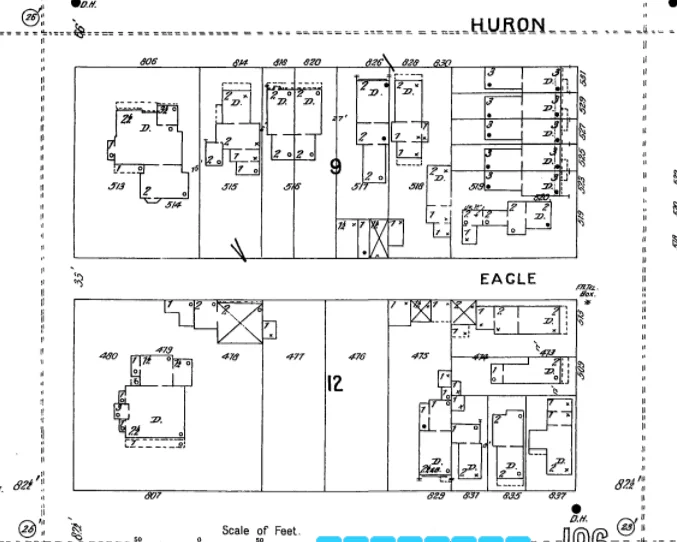
Taken from an 1895 map. 802 used to be 806 North Huron.
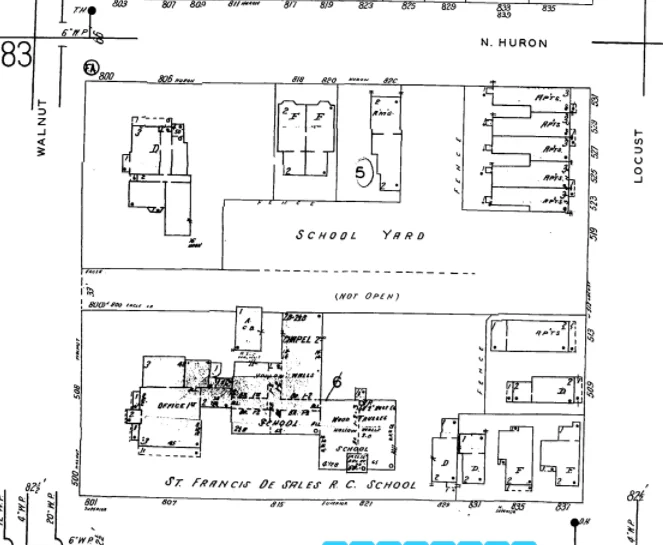
Taken from a 1921 map
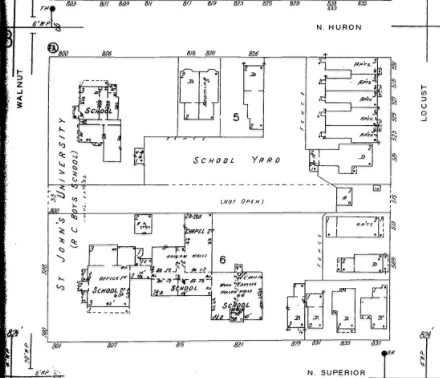
Taken from a 1931 map
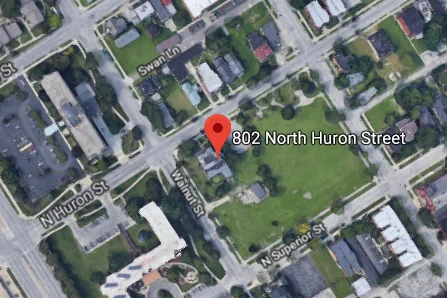
802 North Huron Street, 2017
Archive source
Andrea Batteas / PSEI Research Team. “The Casey Pomeroy House.” PSEI research, n.d. Research report. GHS archival copy.
Continuing Research
More accounts, discoveries, and connections will be added here as we find them.