
Research Archives / PSEI research
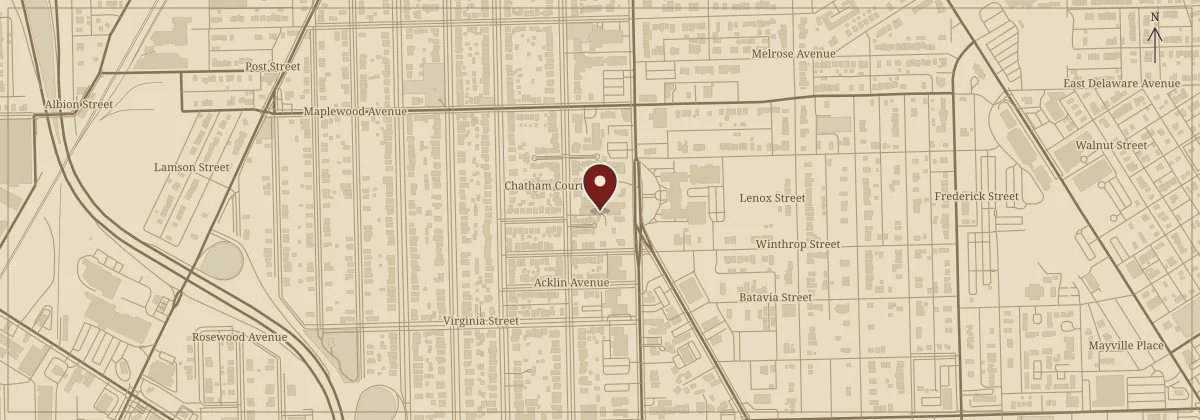
Collingwood Arts Center
Andrea’s PSEI report follows Collingwood Arts Center, the surrounding area, and the people whose lives appear in its history.
- Research date
- Not recorded in the surviving document
- Website edition
- 2026-10-29
Collingwood Arts Center
2413 Collingwood
Toledo, Ohio
Presented by The PSEI Research Specialists
Brief History and Geographics of Lucas County and Toledo:
Lucas County was established in 1835. Originally it was a part of Wood County, OH and Lenawee County, MI. Today Lucas County's borders are Wood Co., OH, (the Maumee River separates Wood Co. from Lucas Co.) Ottawa Co., OH, Fulton Co., OH, Henry Co., OH, Lenawee Co., MI and Monroe Co., MI. The County was named in honor of the 12th Ohio Governor, Robert Lucas. He served in office from 1832-1836. He died, February 7, 1853 and is buried in the Oakland Cemetery in Iowa City, Iowa.
According to the U.S. Census Bureau, the county has a total area of 596 square miles, 341 square miles: land, 255 square miles:water. It is the fourth-smallest county. Prior to Lucas County’s establishment, it was a vast network of forests, wetlands, and grasslands known as the Great Black Swamp.
Referring to Wikipedia:
“The Great Black Swamp (also known simply as the Black Swamp), was a glacially fed wetland in northwest Ohio and extreme northeast Indiana, United States, that existed from the end of the Wisconsin glaciation until the late 19th century. Comprising extensive swamps and marshes, with some higher, drier ground interspersed, it occupied what was formerly the southwestern part of proglacial Lake Maumee, holocene precursor to Lake Erie. The area was about 25 miles (40 km) wide (north to south) and 100 miles (160 km) long, covering an estimated 1,500 square miles (4,000 km2).[3] Gradually drained and settled in the second half of the 19th century, it is now highly productive farm land. During the second half of the 20th century, efforts were undertaken to preserve and restore portions of the swamp to its pre-settlement state.”
Toledo is a city in and the county seat of Lucas County. It is at the western end of Lake Erie bordering the state of Michigan. The city was founded in 1833 on the west bank of the Maumee River, and originally incorporated as part of Monroe County, Michigan Territory. It was re-founded in 1837, after conclusion of the Toledo War, when it was incorporated in Ohio.
After construction of the Miami and Erie Canal, Toledo grew quickly. The city's glass industry has earned it the nickname, "The Glass City".
Crime Statistics for Toledo:
Toledo was ranked 89 of the Top 100 Most Dangerous Cities in America in 2013. Toledo has been identified as the fourth-largest recruitment site for human trafficking in the US.
Crime Statistics for Toledo (continued)
In 2010, a combined total:
|
In 2011, a combined total:
|
In 2012, combined total:
|

Collingswood Art Center is located in the Old West End of Toledo. The
Old West End is considered to be the largest neighborhood of late
Victorian, Edwardian, and Arts & Crafts homes east of the
Mississippi. Though the first log cabin built in the area was in 1818,
it did not become platted until 1866. It rose in popularity because the
most wealthiest came from the downtown area of Toledo to live in West
End. By 1875, the area was booming and continued to do so up to 1915.
However by 1925, it was starting to lose it’s popularity, slowly it
began to decline. By the 1960’s the area was heavily impacted by the
construction on I-75, which caused the demolition of many homes and
whole streets in West End. It wasn’t until the mid-70’s that the West
End Historic Society came to be and made an effort to conserve and
restore many of the houses that had been subjected to urban decay. Today
Old West End is a diverse community to the many that reside in the
beautiful and historic neighborhood. 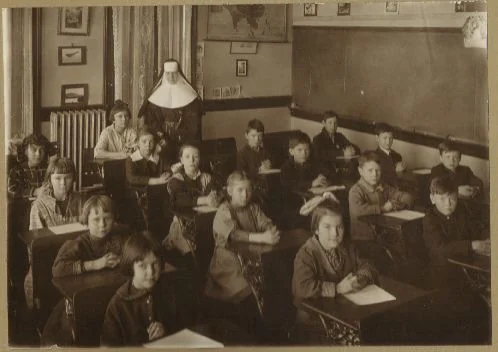
Taken from Benmorales/Instagram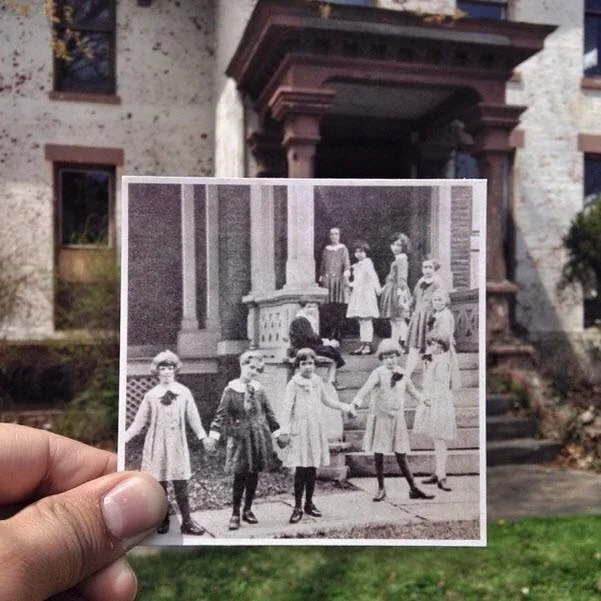
The Beginning:
The Collingwood Arts Center is the former convent for the Ursuline Order of Sacred Heart, and later housed the Mary Manse College and St. Ursula Academy.
On December 8, 1854 five Ursuline Sisters arrived in Toledo from Cleveland at the request of Bishop Amadeus Rappe. They settled in three small frame buildings located on the corner of Cherry and Erie Streets, this would be known as the site of the first Ursuline Convent and St. Ursula Academy. They quickly realized that there was not any organized Catholic school system. WIth their guidance they were able to start a well-organized parochial school system.
When they first opened their doors, over 200 children walked through them that same day. Through time, the number of pupils grew, and it was evident that the location on Cherry and Erie was no longer suffice. Property was purchased on Collingwood Boulevard and the building was ready for occupancy by 1905. In 1922, Bishop Stritch asked the Ursulines to found a diocesan liberal arts college for women, Mary Manse College.
Mary Manse College was a Catholic institution of higher education located in Toledo, Ohio from 1922 until 1975. The college was founded in 1922 at the request of the Bishop of Toledo, Samuel Stritch. Operated by the Ursuline Order of nuns, Mary Manse opened in September 1922 with thirty students. It was strictly an all girls school until 1971, when it became coeducational.
Buildings of The Collingwood Arts Center:
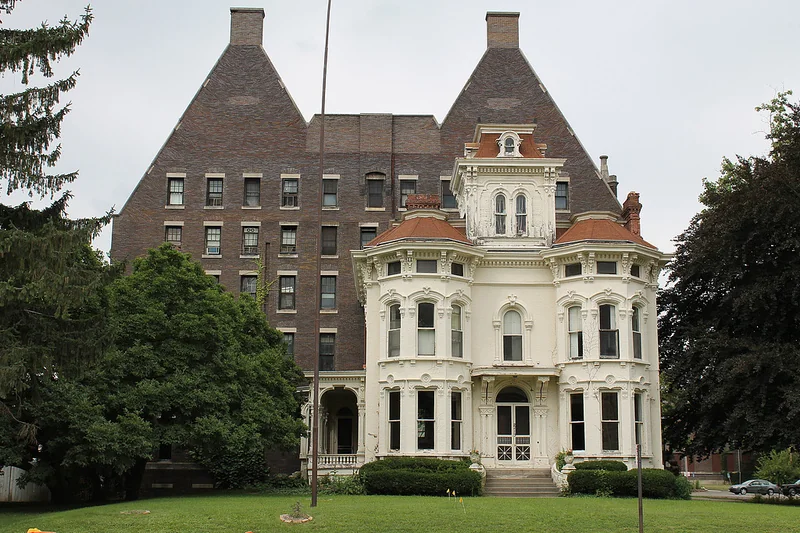
The Gerber House
This is the white painted-brick home in front of the building that faces Collingwood Boulevard, built in 1872 by Christian Gerber. He was a local merchant who spared no expense when building his home. His home included elegant parlors with 15 foot high ceilings, solid walnut doors and elaborate fireplace mantels. Unfortunately, Mr. Gerber’s design was double what he had originally budgeted, thus causing him to file bankruptcy in 1875. Several years later the rear part of the house was torn down so music and academy buildings could be added on.
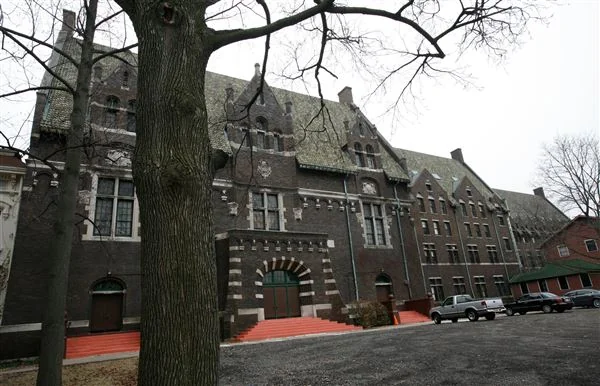
Main Building
Toledo architect Edward Oscar (E.O.) Fallis was commissioned by the The Ursulines to design what is known as the Main building. This elaborate plan was originally meant to incorporated fifteen buildings and three courtyards. The thought was to create a self-sufficient community. Within its walls would include a chapel, library, lecture rooms, art galleries, an auditorium, music building, dormitories, classrooms, the convent, hospital, bakery, and power plant. However, of all the buildings planned, only the music and academy buildings, along with the power plant were ever constructed. The building was completed September 6, 1905.
Fallis desired a Flemish Gothic look for the architecture. He chose vitrified bricks with a dark-colored mortar, as well as a green Spanish tile. The interior of the building were to have stained oak woodwork, with art nouveau stair railings. His choice in 14th and 14th century Flemish architecture leaves little to be desired when looking for decadent design.
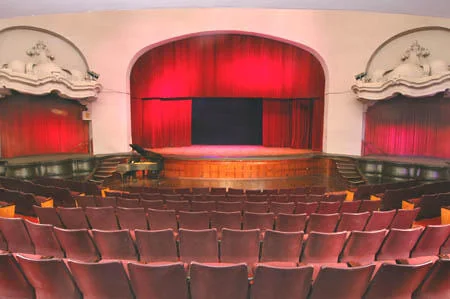
The Auditorium/Theater
Truly a masterpiece of when it comes to its design. This theater is designed so that each one of its 600 patrons would have an unobstructed view no matter where they may sit within the auditorium. Its elliptical dome blends with the surrounding walls at such perfection that is provides the audience with the most excellent acoustics. There are two spiral staircases that lead up to balconies, that are known as “private galleries”, allowing certain members to enjoy the events without being in the public eye. Its four large glass chandeliers hung from the center of the ceiling can be lowered for cleaning. The structure was completely built using concrete so that it could be fireproof.
The inaugural event in the Auditorium was a lecture on Shakespeare’s Richard III by a Rev. D.J. Stafford of Washington, DC, who was in the region to participate in graduation exercises at both Notre Dame and The Ohio State University.
The theater was later named in honor of Lois M. Nelson
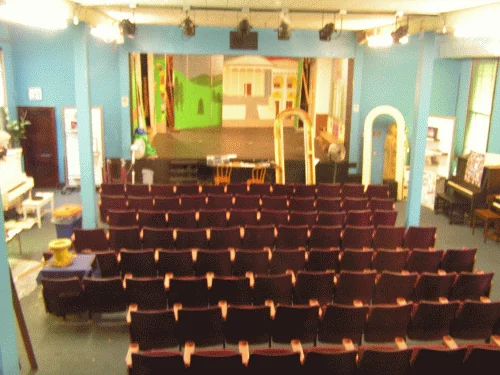
The Chapel
Located adjacent to the Academy, it was built in 1918 for the Sisters when they re-located to the Collingwood site. The rooms above were used as dormitories for Temporary Professed Nuns. Though the chapel was intended to only be temporary, it still stands today. It is currently home to The Children’s Theater Workshop.
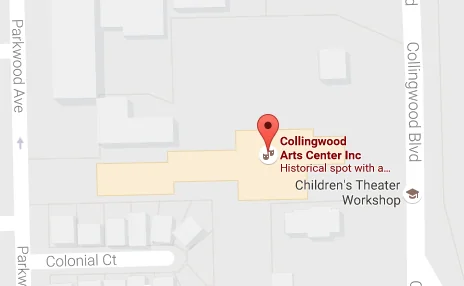
The Grounds
Over the years as the Ursulines acquired adjacent properties and buildings to be used by Mary Manse College the surrounding grounds expanded. Though separate from St. Ursula Academy, Mary Manse made use of the auditorium for their own theatrical performances. In 1975 most of the adjacent properties were sold off when Mary Manse College closed. Though the original power plant still stands, it is not part of the property that is currently owned by Collingwood Arts Center. In 1985, the Academy building, Gerber house, Terrault house and chapel were sold to Collingwood Arts Center.
Names of Those Involved with the Building:
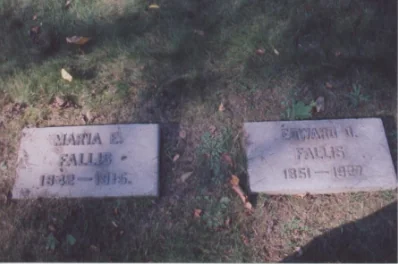
1) Edward Oscar (E.O.) Fallis:
Born: June 8, 1851
Died: July 7, 1927
Buried: Woodlawn Cemetery
Edward O. Fallis was a renowned architect and designer in and around the Toledo, Ohio area. He married Maria E. Harris February 22,1872, and was the father of five children; Ruth, Julia, John R., Charles and Merrie.
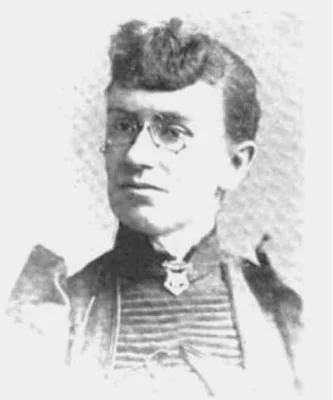
2) Claudia Quigley Murphy:
Born: March 28, 1863
Died: October 2, 1942
Buried: Woodlawn Cemetery, Toledo, Ohio
Born in Toledo in 1863, Claudia Quigley Murphy attended school at the Ursuline Convent of the Sacred Heart. She began a career in journalism as a correspondent for the Cleveland "Catholic Knight," then served as managing editor of the Grand Rapids edition of the "Michigan Catholic."
Later in life she acted as a home economics consultant to major companies, writing books and articles. Her book, “The History of the Art of Table Setting” can still be found in many libraries.
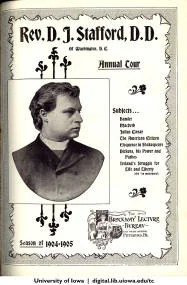
3) Reverend Dennis Joseph Stafford
Birth: Unknown
Death: January, 8 1908
Buried: Mount Olivet Cemetery
Washington DC
Buried alongside his parents, Reverend Stafford's burial ceremony
was described as "imposing" and viewed by "thousands of persons," according to the "Washington Post"article. One hundred men watched over his body; the men were divided into two groups for the nighttime shift.
4) Lois M. Nelson
Birth: April 20, 1922 (?)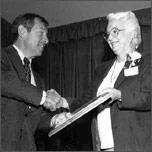
Death: January 29, 1998 (?)
• Chair of the Toledo Area Salvation Army Advisory Board
• Executive Director for the Toledo Building Owners and Managers Association
• Selected as Lucas County Veteran of the Year, 1995
• President, Toledo Council of the Navy League
• Co-chair for the commissioning of the U.S.S. Toledo
• Spokesperson for the Red Cross Veteran's Blood Drive
• Inducted into the Ohio Senior Citizens Hall of Fame in 1994

5) Thomas L. “Spyder” Pyle
Born: May 13, 1956
Died: May 21, 2016
Buried: Springfield Cemetery
Obituary:
Thomas L. “Spyder” Pyle, 60, of Toledo, Ohio, passed
away on May 21, 2016, at Hospice of Northwest Ohio, Perrysburg. He was born on May 13, 1956, in Columbus,
Ohio to Gary W. and Lillian M. (Miller) Pyle.
Spyder was one of the most generous and helpful people
around. He used to donate by collecting toys, clothes,
and food for those in need. If tragedy struck his community or family, he would be the first to willingly donate his time, love, and energy. Spyder would never hesitate to help someone in need - from strangers to his closest family.
Spyder was a graduate of Anthony Wayne High School, where he was one of the top basketball players of his class. He was very active for over 15 years in the Collingwood Arts Center “Today” Productions and won several accolades for dedicated service. Spyder took pride in his colorful and distinctive trucks. He was involved in the Hot Times Art Cars, and even won awards for his decorated trucks.
Spyder is survived by his mother, Lillian M. Pyle; sisters, Diana Goebel and Lisa (Don) Purvis; nieces and nephews, Savannah Pyle, Christina (Robert) Parkey, Tim (Emily) Goebel, Rachel Pyle and Jeff Pyle. He was preceded in death by his father, Gary W.; brother, Gary L. Pyle Sr., and nephew, Gary L. Pyle Jr.
Friends will be received on Friday, May 27, 2016, from 3 p.m. to 8 p.m., at Neville Funeral Home, Southwest Chapel, 7438 Airport Highway, Holland, Ohio 43528 (419-865-8879). Visitation will continue on Saturday, May 28, 2016, from 10 a.m. to 11 a.m. with a service to follow at 11 a.m. in Neville Funeral Home. Burial will follow in Springfield Township Cemetery.
6) Sister Mary Jane
Cosentino 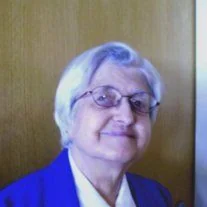
Born: Unknown
Died: December 31, 2013
95, also known as Sister Rose Angela, died at Ursuline Center on December 31, 2013. Sister Mary Jane entered the Ursuline Convent in 1946 from St. Peter’s parish. Huron, Ohio. She was the daughter of the late Joseph and Rose Cosentino of Berlin Heights, Ohio.
Sister Mary Jane received her Bachelor of Science degree from Bowling Green State University and a Master’s degree from Purdue University. She had numerous science grants and studied at St. Louis University, Marquette University, Catholic University of America, and the University of Toledo. She received honors as the Outstanding Science Teacher and Outstanding Biology Teacher and the Governor’s Award for Excellence in Youth Science Opportunities. Prior to her entrance in the Ursuline Convent, she taught at Milan High School, Milan, Ohio and Sandusky Junior High School in Sandusky, Ohio. Her teaching career as a nun began at Rosary Cathedral and St. Thomas Aquinas parishes in Toledo. She also taught at Mary Manse College, St. Gerard High School, Lima, Tiffin Calvert High School and Lima Central Catholic High School. From 1964 until her retirement in 2004 she taught at St. Ursula Academy and was chair of the Science Department. After retirement she volunteered her services at St. Ursula’s wherever she could be of help to others. She also spent many hours on the Stamp Collection of the Ursuline Convent, carefully scrutinizing each stamp and preparing many stamps for sale to other stamp collectors.
Sister Mary Jane was preceded in death by her parents and a brother Vincent and her twin sister, Catherine Cicconetti. She is survived by her sisters, Sister M. Antoinette, OSU and Theresa Enciso, her brother, Joseph, many nieces and nephews and her Sisters in the Ursuline Community. Memorials may be made to the Ursuline Convent 4045 Indian road, Toledo, OH 43606.
Visitation will be at Ursuline Center 4035 Indian Road on Friday, January3, 2014 after 3:00 p.m. followed by the Vigil service at 6:30 p.m. The funeral liturgy will be on Saturday, January 4, 2014, at the Ursuline Center at 10:30 a.m.
7) Mary Andrendita Grimesey
Born: Unknown
Died June 25, 2015.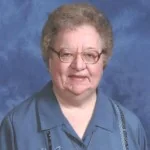
Sister joined the SND in 1952 and began her role as a teacher. She received her Bachelor of Arts degree in Education from Mary Manse College in Toledo and taught for 48 years in the Toledo Diocese. She worked with the children she loved in the following schools: St. Mary, Leipsic; St. Joseph, Fremont; St. Mary, Sandusky; Sacred Heart, Bethlehem; St. John, Delphos; St. Ann, St. James, Christ the King and Mary Immaculate in Toledo. In 2008 she retired to the Provincial Center where she was active in community service.
8) Samuel
Alphonsius Stritch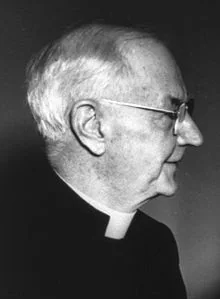
Born: August 17, 1887
Died: May 27, 1958
“Bishop of Toledo
On August 10, 1921, Stritch was appointed the second Bishop of Toledo, Ohio, by Pope Benedict XV. He received his episcopal consecration on the following November 30 from Archbishop Henry K. Moeller, with Bishops John Baptist Morris and Thomas Edmund Molloy serving as co-consecrators. At age 34, he was the youngest bishop in the United States at the time.
During his tenure in Toledo, Stritch established Mary Manse College in 1922 and incorporated the diocesan Catholic Charities in 1923. He also oversaw the beginning of the construction of Holy Rosary Cathedral, whose cornerstone was laid by János Cardinal Csernoch in 1926.
While in Toledo Stritch presided at the confirmation of Danny Thomas. Stritch would mentor Thomas throughout his life and urge him to locate St. Jude Children's Research Hospital in Memphis” -Excerpt from Wikipedia
A Few Mary Manse College Alumni Who Have Passed Away, with Graduating Year.
|
|
Death at Collingwood Art Center:
Brian K Felster:
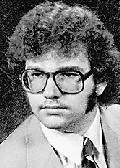
Born: March 4, 1963
Died: October 29, 2011
Brian K. Felster, a champion of the arts who was a leader the last six years at the nonprofit Collingwood Arts Center, most recently as interim executive director, died Oct. 29 at the center of valvular heart disease. He was 48. He was at the arts center -- where he also lived -- and collapsed as he made preparations for an event about to take place there, the annual Witch's Ball of Toledo. He helped form the Northern Spirits Coven of Witches more than 20 years ago, and the event went on as planned -- as he would have wanted, said his life partner, Manuel Quintano III.
Mr. Felster was appointed interim executive director of the arts center in August, 2010. He succeeded Audrey Johnson.
He left his long-term employment with Ames Tool Taping Systems, where
he was a manager, and in 2005 became Collingwood Arts Center program
director. The arts center was formed in 1985 at the former Mary Manse
College and the convent for the Ursuline Sisters of Toledo.
He scheduled performances at the arts center through the Lois M. Nelson
Theatre and Performing Arts Program, named for the late Toledo activist
who was a founding member of the center. During shows, he controlled the
light and sound -- and took charge of hiring extra light and sound
technicians when needed -- and kept up the Web site.
"He had been coming off and on for years, and he decided he wanted to
switch [careers] and fully support this place," said Mr. Quintano, the
arts center's office manager.
Another motivation was "the fact that he was actually helping struggling
artists out," Mr. Quintano said. "He loved helping younger minds develop
and prosper."
As program director, according to the arts center's Web site, he helped
the center's resident artists plan and produce exhibits in the facility
-- and to find places to present their art in the wider world.
His role as program director included scheduling workshops in the arts
for the resident artists and the community and to arrange a summer
program for schoolchildren.
He was a photographer and graphic designer as well and handled the arts
center's Web design.
"He really cared about the artists' community as a whole," Mr.
Quintano said. "His passion for the arts is what made him stay here so
long."
He was born March 4, 1963, in Mount Clemens, Mich., and grew up in Fair
Haven, a community in St. Clair County. He was a 1980 graduate of
Algonac High School, where he found his first experiences in the
performing arts."He started in high school operating the lights when the
school was having plays," his mother, Patricia Mattice, said.
He was a manager for Ames' stores in Troy, Mich., and in Delaware before he moved to the Toledo area, his mother said.He attended Macomb Community College and Owens Community College.
He was an online gaming enthusiast. World of Warcraft; Vanguard, and Minecraft were among his favorites. According to the arts center's Web site, Mr. Felster enjoyed "a good cup of coffee with great conversation, the fine art of cooking and the not so fine art of eating."
Surviving are his life partner, Manuel Quintano III; mother and stepfather, Patricia and John Mattice; father, Robert Felster, and brothers, Robert and Kevin Felster. -Taken from the Toledo Blade online
Cold Cases Within One Mile of Collingwood Arts Center:
1) April Nicole Johnson, 24
Date of Death: 5/27/2009
Cause: Strangulation
Details: Found unconscious and unresponsive in a central-city alley on May 23. She died four days later.
Crime Scene: 200 block of Prescott Street, Toledo
2) Robert Brundage, 66
Date of Death: 7/7/2009
Cause: Assault
Details: An Old West End native and longtime community activist, Brundage died after spending two weeks in a coma. He was attacked and robbed while riding his bicycle in the historic neighborhood.
Crime Scene: Collingwood Boulevard near Victoria Place, Toledo
3) Kantraylious Guy Jr., 16
Date of Death: 12/21/2010
Cause: Gunshot
Details: Victim was discovered dead in residence after dad ran outside saying his son had been shot.
Crime Scene: 500 block of Acklin Avenue. About 800 Feet away
4) Marquise Chandler, 21
Date of Death: 4/15/2010
Cause: Gunshot
Details: Died the day after his body was found in the driveway with an apparent bullet wound to the back of the head.
Crime Scene: 300 block of Islington Street. About 1600 Feet away
5) Fannie Mae Smith, 81
Date of Death: 1/3/2012
Cause: Gunshot
Details: Victim was watching television in her central Toledo home when someone shot through the window, hitting her. She died a short time later at a Toledo hospital.
Crime Scene: 2264 Fulton St., Toledo
6) Brian Minley
Date of Death: 12/31/2012
Cause Gunshot
Details: Police confirm a man was found at 3:15 p.m. inside a home at 1241 Berdan Ave., suffering from either stab or gunshot wounds. He was transported to an area hospital where he died. Two women at the scene were taken away by police.
Crime Scene: 1241 Berdan Ave., Toledo
7) Omar Braswell Sutton, 19
Date of Death: 6/20/2012
Cause: Gunshot
Details: Victim was found shot at the corner of West Collingwood Boulevard and Bancroft Street and taken to a Toledo hospital where he died. He suffered a gunshot wound to the chest.
Crime Scene: West Bancroft Street & Collingwood Boulevard, Toledo
8) Jazmon Hoskins, 21
Date of Death: 5/24/2012
Cause: Asphyxiation
Details: Victim was found dead inside of a central Toledo home. Preliminary autopsy results suggest she died of asphyxiation caused by strangulation.
Crime Scene: 3122 Parkwood Ave., Toledo
9) Brian Martin, 52, of Ypsilanti, MI
Date of Death: Last seen on June 22. Reported missing June 28.
Cause: Unknown
Details: Brian Martin, 52, of Ypsilanti, Mich., was reported missing to the Ypsilanti and Toledo Police Departments on June 28. Toledo police report that evidence found indicates Mr. Martin was killed in Toledo. Toledo authorities have filed murder charges against Robert D. Strauss and Desirae Strauss. The Strausses, who are husband and wife, are being held in the Madison County Sheriff‘s Office in Anderson, Ind., on unrelated charges.
Crime Scene: Unknown
10) Tyler McIntoush, 16
Date of Death 7/24/14
Crime Scene: Collingwood Boulevard near Central Avenue
Details: Tyler Mcintoush, 16, was reportedly shot in the head, and found by a passerby lying on the sidewalk on Collingwood Boulevard, near Collingwood and Central Avenue. First responders were called to the scene about 3:20 a.m.
Cause: Gunshot
11) Desmont Kendall, 17
Date of Death: 8/14/16
Cause: Gunshot
Details: Officers were called to the scene at Nesslewood and Scottwood avenues about 1 a.m. where they found a person suffering from a gunshot wound, according to a statement from police. The victim, Desmont Kendall, 17, was pronounced dead at the scene, police said.
Crime Scene: Nesslewood and Scottwood avenues
Noteworthy Events:
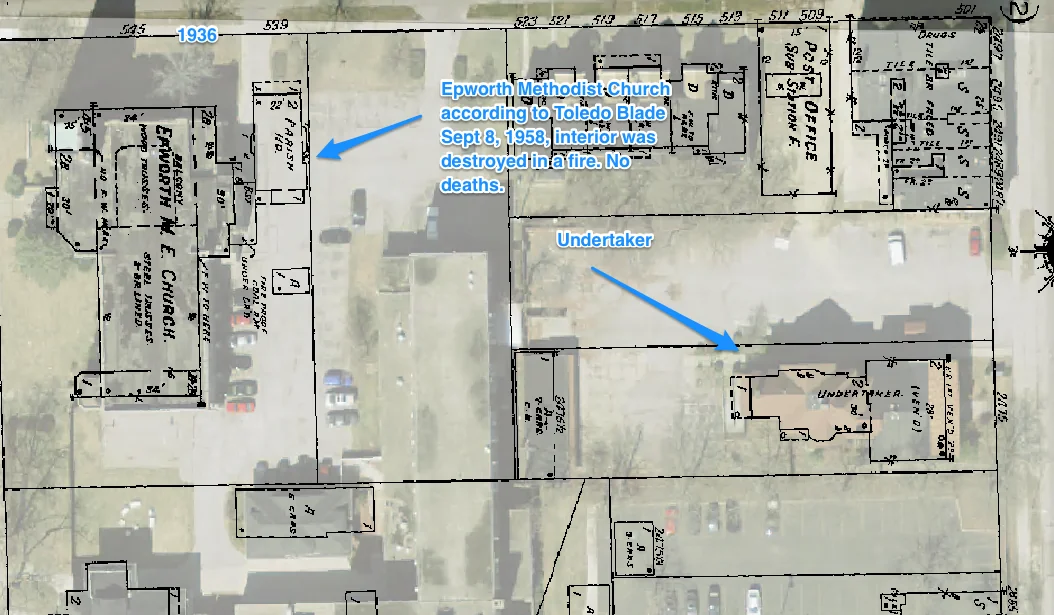
1) The Fire of Epworth Methodist Church.
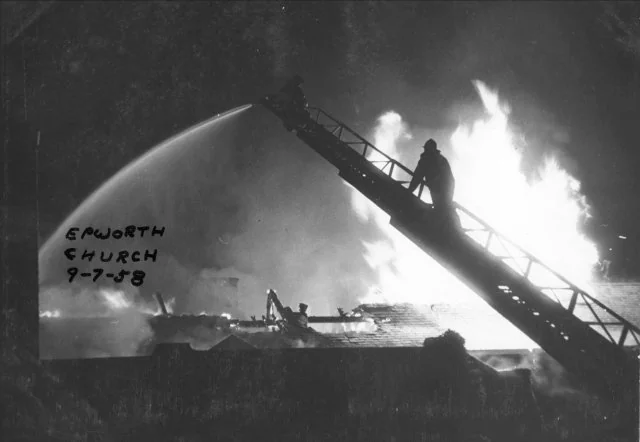
An arson fire consumed the Epworth Methodist Church on September 7, 1958. The huge loss coupled with a decline in membership led the congregation to sell the damaged structure to the Ursuline Sisters of the Sacred Heart who remodeled it into a library for Mary Manse College. Reportedly, no one was injured.
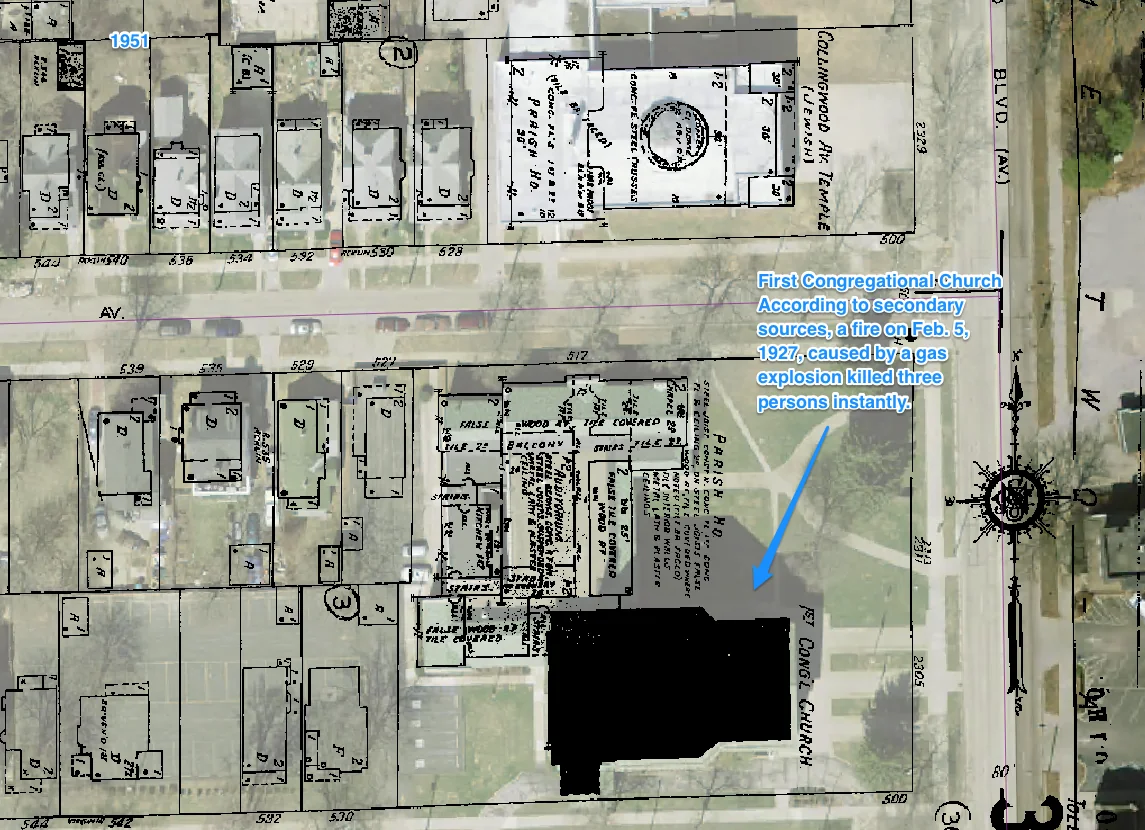
2) First Congregational Church Gas Explosion:
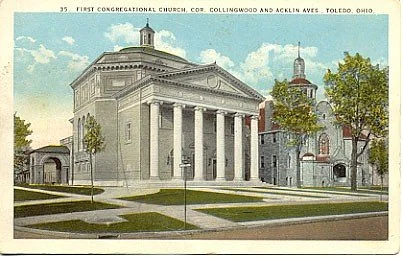
A gas explosion of the First Congregational Church rocked the West End area February 2, 1927. Three people were killed instantly.
Old Photos of Collingwood Arts Center:
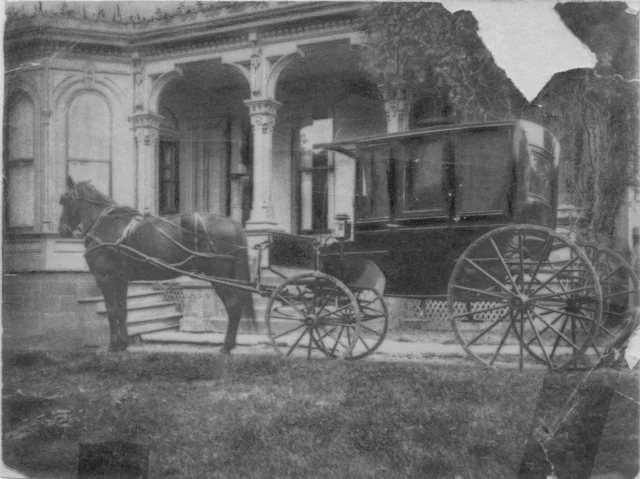
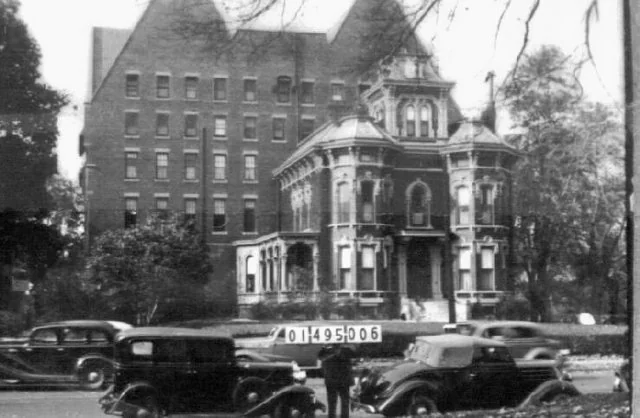
Carriage entrance to the Gerber House Mary Manse College, 1930
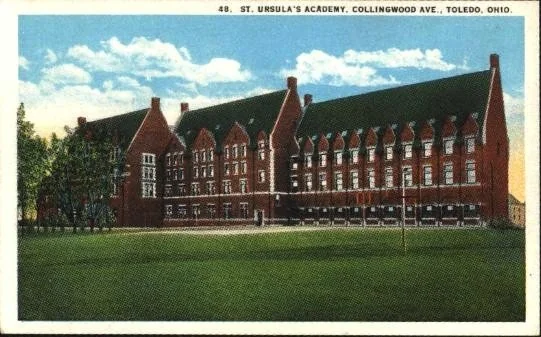
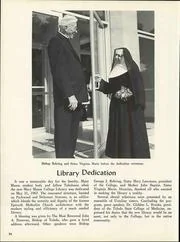
Saint Ursula Academy, postcard Bishop Rehring and Sister Virginia Marie
before Library Dedication Ceremony, May 31, 1967
Collingwood Art Center Neighborhood overlaid with map from 1951
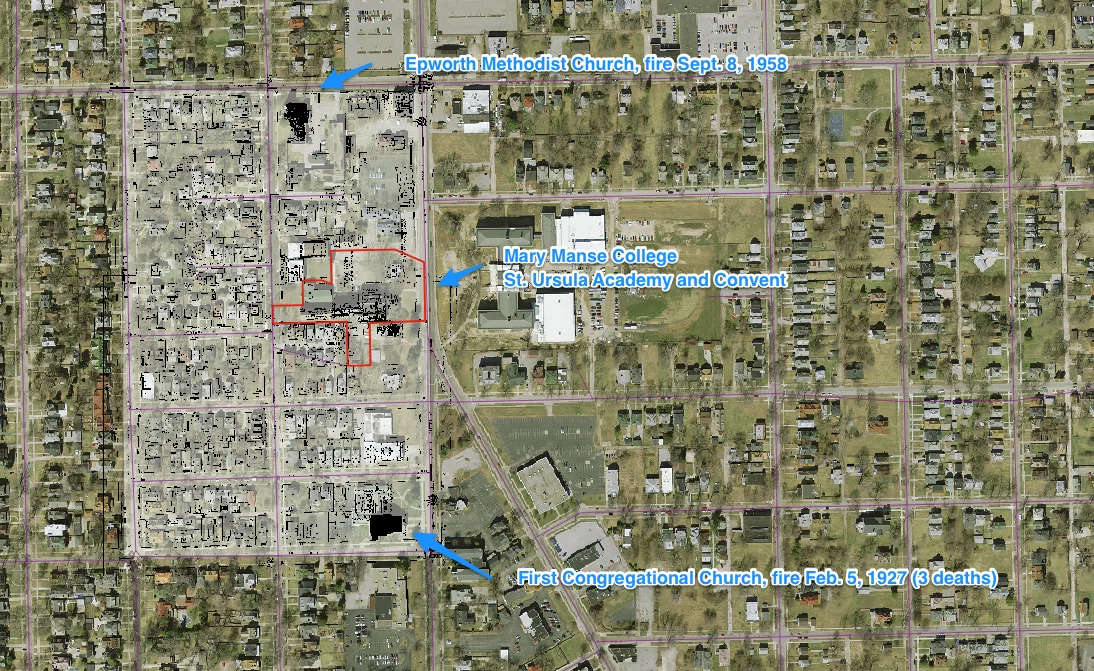
Mary Manse College/ St. Ursula Academy Close-Up 1951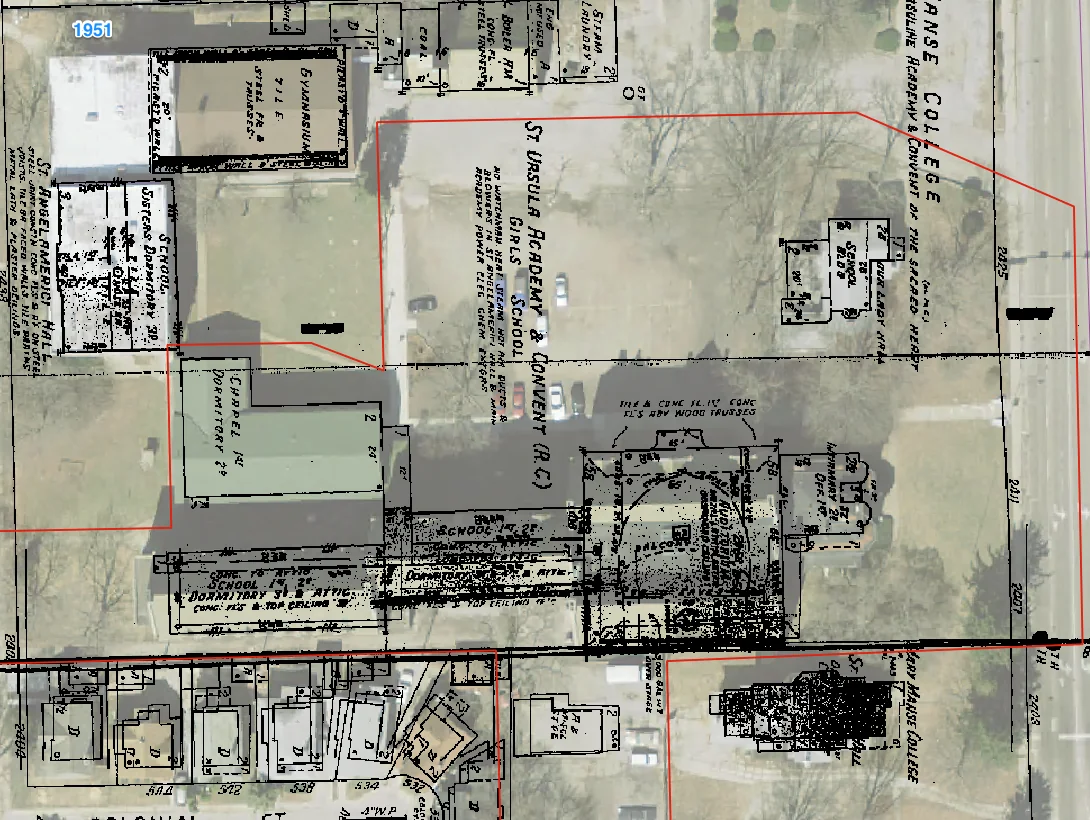
Epworth Methodist Church Close-Up 1936
First Congregational Church Close-Up 1951
[PSEI Logo.jpg — image could not be decoded]
PSEI Research Specialists:
Andrea Batteas
Jonathan Batteas
Nicole Jankowski
Archive source
Andrea Batteas, Jonathan Batteas, and Nicole Jankowski / PSEI Research Specialists. “Collingwood Arts Center.” PSEI research, n.d. Research report. GHS archival copy.
Continuing Research
More accounts, discoveries, and connections will be added here as we find them.